


Granny
DVloper
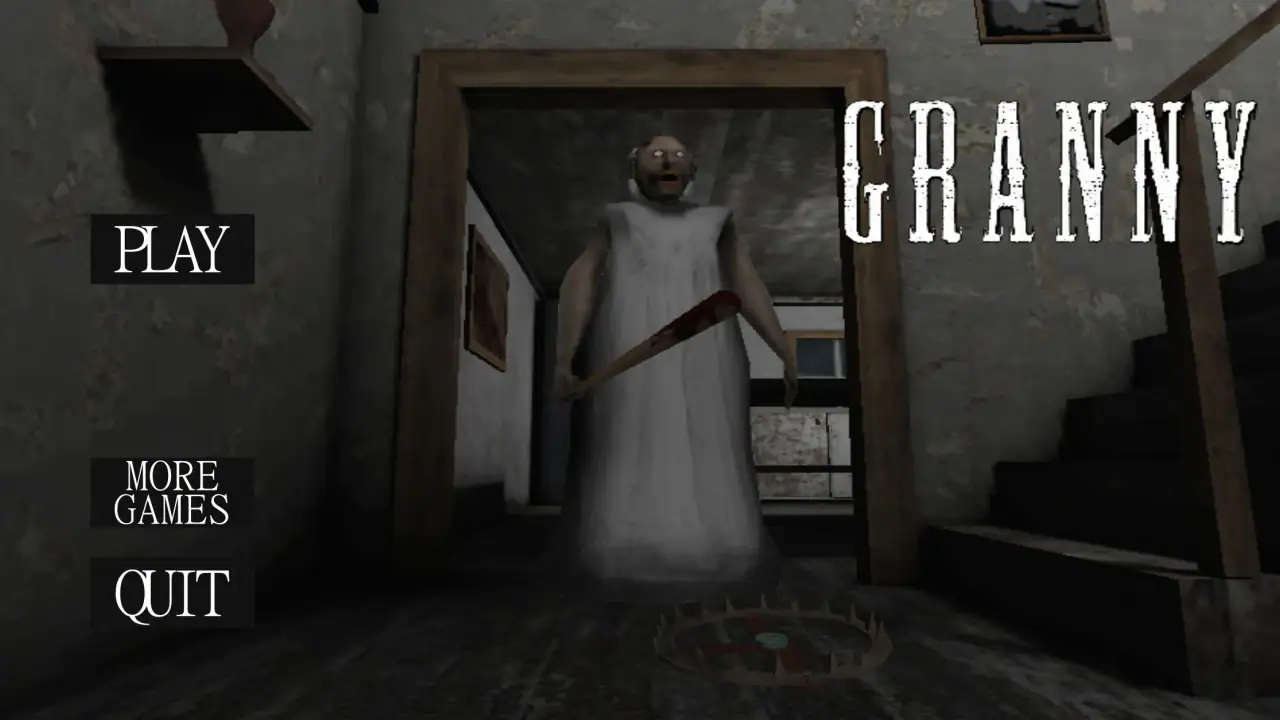
I expected Granny to be a simple scare-and-run game, but after spending time with it, I found that its real strength is how quickly it creates pressure. You wake up trapped inside a hostile house, and every careless movement can turn a quiet attempt into a frantic escape. It is an arcade horror game from DVloper, free to download, and its basic idea is easy to understand within moments: explore, find a way out, and avoid the person guarding the building.
That simplicity makes it unusually good for short sessions. I can start a round while waiting for a bus, play for a few minutes, fail, and immediately understand what I want to try differently next time. It does not need a long tutorial or a complicated story before the tension begins. At the same time, it is not a relaxed game. The Teen content rating is important because the atmosphere depends on sudden danger, threatening sounds, and the constant possibility of being caught.
Why the first few minutes work so well
The opening is effective because it gives me just enough information to act without explaining every answer. The house becomes a puzzle box, but the fear comes from having to investigate it while Granny is actively searching for me. I am not simply looking for hidden objects in peace; I am deciding whether a useful item is worth the noise, detour, or risk involved in reaching it.
Related News

Granny: The Chilling Game Gripping Mobile Gamers

Hungry Shark Evolution: Conquering the Mobile Arcade Seas

Why Block Craft 3D Is Redefining the Mobile Arcade Game
That creates an immediate hook for people who enjoy games built around observation rather than combat. There is no satisfying weapon-focused power curve to fall back on. My progress comes from learning the layout, remembering where I saw something useful, and becoming more careful with every attempt. If I make a mistake, the lesson is usually clear enough to influence the next run.
The controls are designed for touch, so the game is best approached with patience rather than rapid finger movements. I found that hurried swipes often caused more trouble than the threat itself. A better habit is to make small, deliberate movements, pause to listen, and keep an escape route in mind before interacting with anything. That simple change makes the experience feel less random and more like a test of attention.
Related News

Why WhatsApp Messenger Still Makes Everyday Communication Feel Easy

Jurassic World: The Game Is the Better Dino Tycoon for Strategic Players

Threads in Real Life: Who Should Join, Lurk, or Leave

How SHEIN Turned Shopping Into an Endless Content Feed

How to Make Fortnite Feel Smarter on Mobile

Should You Switch to Microsoft Outlook on Mobile?
For an everyday example, imagine having a short break between errands. A single attempt can fit into that gap because the objective is always present and the game does not require a long setup. Yet I would not recommend starting it when I need to be completely calm or when other people are likely to interrupt every few seconds. The tension depends on concentration, and losing track of what I was doing often made the house feel confusing rather than frightening.
The game has attracted a very large audience, with over 500 million installs and an average rating of 4.3 from around 4.3 million ratings. Those figures do not replace personal taste, but they help explain why this compact horror formula has remained visible among mobile arcade games. Its appeal is immediately readable: hide, search, listen, and try again.
A session has a clear rhythm
What I like most is the rhythm between quiet investigation and sudden panic. A good attempt often begins slowly. I move through a room, inspect possible hiding places, and try to remember which paths connect. Then one sound changes the mood. I may have disturbed something, taken a risky route, or simply stayed exposed for too long. The next few seconds become about survival rather than planning.
Gallery
This rhythm gives short sessions a satisfying shape. Even when I do not escape, I usually get a small piece of useful knowledge. I may discover a safer way through a room, realize that an apparently convenient route is too noisy, or learn that rushing toward an item is worse than preparing the area first. The game rewards memory more than reflexes, which is why a failed attempt can still feel productive.
There is also a nice difference between knowing what I need and knowing how to reach it safely. That gap keeps the house interesting. An item can be visible but practically inaccessible because Granny’s patrol, the room layout, or the noise involved makes the approach dangerous. I learned to treat every object as part of a route rather than as an isolated collectible. That is one of the more useful strategic insights the game offers.
My most reliable approach was to avoid exploring randomly. I first tried to build a mental map of nearby rooms, then chose one small objective and returned to a familiar hiding spot when the situation became unsafe. This is less exciting than sprinting everywhere, but it improves consistency. It also makes the game more suitable for players who enjoy solving pressure-based puzzles instead of relying on luck.
The immediate pleasure comes from those tiny decisions. Should I investigate the sound behind me, stay still, or move toward the next doorway? Should I risk checking another room, or preserve the progress I already made? Because the rules are easy to grasp, the tension is not buried under menus or character statistics. The house itself is the system I am learning.
Returning after an interruption
Granny is reasonably easy to pick up again after a short break because the central goal never changes. I do not need to remember a long narrative or a complicated set of missions. However, returning is not completely frictionless if I was in the middle of a tense attempt. An interruption can break my memory of the route, and that matters because small details—where I heard a sound, which doorway I used, and what I was carrying—affect my next decision.
For that reason, I think it works best in two different modes. In a very short break, I play with the modest goal of learning one area or testing one route. When I have more uninterrupted time, I attempt a serious escape. This distinction prevents a quick session from feeling disappointing. I do not need to finish the whole challenge every time; I can use a few minutes to gather information.
The game is also a better fit for people who can accept restarting. Failure is part of the structure, not an unusual setback. If I expect every session to end with obvious progress, I may find the repeated captures frustrating. If I treat each attempt as a scouting trip, the same design becomes much more enjoyable. The important question is not only whether I survived, but whether I learned something that changes my next plan.
That approach helps with phone interruptions too. If a message or task pulls me away, I can return to the broad objective without studying a complex interface. Still, I would avoid playing during a situation where I must constantly put the phone down. The atmosphere relies on sound and concentration, and frequent interruptions weaken both.
Players who want a completely passive mobile experience should probably choose a calmer arcade title instead. This is not a game I can enjoy properly while watching another video or carrying on a conversation. It asks me to notice small environmental clues and react before the danger reaches me. Its simplicity makes returning possible, but not mindless.
What repetition teaches—and what it cannot fix
The replay value comes from improving my understanding of the house. Early attempts are mostly about discovering how exposed I am. Later attempts become route-planning exercises: I know more about the spaces, I recognize risky behavior sooner, and I make fewer unnecessary movements. The same setting can therefore feel different depending on how much I have learned.
That kind of repetition is satisfying for players who enjoy mastery. I like seeing a failed route become a reliable route after a few adjustments. A hallway that once felt impossible may become manageable once I stop treating it as a shortcut. Likewise, a hiding place becomes more valuable when I use it as part of a plan rather than as a desperate last resort.
There is a trade-off, though. Once the surprise fades, the game depends heavily on whether I enjoy repeating familiar spaces under pressure. It does not offer the broad variety I would expect from a larger arcade collection or a constantly changing action game. If my main reason for playing is novelty, I may lose interest after the discovery phase. If I enjoy refining a method, the repetition has more value.
I also noticed that the fear changes over time. At first, every sound feels unpredictable. Later, the tension becomes more practical: I am calculating risk, timing, and escape options. That does not make the game worse, but it shifts the experience from pure horror toward a stealth puzzle. People looking for an endlessly surprising scare generator may prefer something with more varied scenarios. People who like learning an enemy’s pressure pattern may appreciate this change.
A useful tip is to resist the urge to collect every possible clue in one attempt. I made better progress when I focused on a single objective and used the rest of the run to understand movement and danger. Trying to solve everything at once created noise, confusion, and unnecessary exposure. The house rewards a sequence of manageable decisions more than one heroic dash.
Another practical tip is to use sound as information rather than decoration. When I played with the volume low, I felt that the game became less fair because I was ignoring one of its most important warnings. With sound available, I could slow down before entering a risky space. This does not remove the tension; it gives the tension a clearer cause and makes successful escapes feel earned.
How it compares with other mobile arcade choices
Compared with endless runners, Granny has less emphasis on continuous motion and score chasing. An endless runner gives me instant action and usually lets me restart with a simple swipe pattern. Here, the pleasure comes from cautious exploration, remembering routes, and surviving a specific situation. I would choose a runner for a quick reflex session and this game for a short problem-solving session with a horror mood.
It also differs from casual puzzle games that let me think without pressure. A traditional puzzle may reward careful experimentation, but Granny makes experimentation dangerous. I cannot always stop to test every possibility because the environment is actively threatening me. That pressure is the main reason to choose it, but it is also the reason some players will find it stressful rather than entertaining.
Compared with larger horror adventures, it is much easier to understand and start. I do not need to commit to a long story before getting the central experience. The compromise is that its world feels narrower and its replay value depends more on personal tolerance for repetition. I see it as a focused mobile challenge, not a replacement for a deep narrative horror game.
The free entry point is helpful for trying the formula without a purchase barrier. The game includes in-app purchases priced at $0.99 per item, so anyone sensitive to optional spending should check the purchase flow before handing the phone to a child. The Teen rating also means I would not treat it as a universal family game simply because it is free.
Device compatibility is fairly approachable: the current version is 1.8.8 and it requires Android 6.0 or later. That makes it a practical option for people using an older Android phone, although the experience will still depend on how comfortable the device feels for touch movement and sound. I would test the controls for a few minutes before deciding whether the game suits the handset.
Who should play it, and who should pass
I recommend it to players who want a compact horror game with a clear objective, repeatable attempts, and tension built from movement rather than combat. It is especially good for someone who enjoys learning a map, spotting patterns, and turning failed attempts into better routes. It also works for friends comparing strategies, because the rules are simple enough to discuss even when each person prefers a different approach.
I would skip it if I want relaxing background play, a rich story, or constant new content. I would also avoid it if sudden pressure makes mobile games unpleasant. The game does not soften its central idea: I am trapped, I am vulnerable, and mistakes can end the attempt. That directness is its identity, but it leaves little room for players who want a gentler arcade experience.
Parents should pay attention to the Teen age guidance rather than assuming the simple controls make it suitable for younger children. The horror is not hidden behind complicated presentation, and the pursuit atmosphere can be intense. I also would not recommend using it as a distraction for a child who is already nervous or easily startled.
After playing it with the editorial focus I value most—clear short sessions, tolerance for interruptions, immediate enjoyment, and replay value—I think the balance is strong but specific. It is excellent at delivering a quick burst of focused tension. It is less successful as a game I can leave running casually or revisit forever without eventually feeling the repetition.
My casual verdict is that Granny earns its popularity through clarity rather than complexity. I always know what I am trying to do, and each attempt gives me a reason to adjust my behavior. The best way to enjoy it is to play in small, attentive sessions, use sound carefully, and treat every failure as information. If that sounds appealing, this free arcade horror game is worth trying; if I wanted comfort, variety, or a low-pressure distraction, I would choose a different option instead.
DVloper has kept the concept focused, and that focus is why the game remains easy to recommend with a qualification. It is not a broad adventure and it is not a soothing time-killer. It is a compact test of nerves, memory, and patience, with enough immediate feedback to make another attempt tempting. For the right player, that is more than enough.
FAQs for Granny
What is the main objective of the game Granny?
In Granny, the primary objective is to escape from a locked house while avoiding the eerie presence of Granny, who patrols the home. Players have five days to solve puzzles, find keys, and unlock doors to make their escape, all while staying quiet to avoid attracting Granny's attention.
Is Granny suitable for children?
Granny is rated for teens and older due to its horror elements and jump scares. The game's atmosphere is tense, with dark visuals and suspenseful sound effects. Parents should consider whether the spooky content and the game's intensity are appropriate for their children before allowing them to play.
Can I play Granny offline?
Yes, Granny can be played offline. Once the game is installed on your device, you can enjoy the full experience without needing an internet connection. This makes it a great option for entertainment during travel or in areas with limited connectivity.
Are there any in-app purchases in Granny?
Granny is free to download and play. However, it includes ads that can be removed through an in-app purchase. There are no other significant in-app purchases, ensuring that players can experience the entire game without needing to spend money.
What platforms is Granny available on?
Granny is available for both Android and iOS devices. It can be downloaded from the Google Play Store for Android users and the Apple App Store for iOS users. The game supports a wide range of devices, offering accessibility to many players.
Pros
- Immersive horror atmosphere.
- Challenging puzzles and tasks.
- Engaging replayability.
- Simple controls for easy navigation.
- Regular updates with new features.
Cons
- Graphics may feel outdated.
- Limited storyline depth.
- Can be frustratingly difficult.
- Ads can interrupt gameplay.
- Requires internet for some features.


